Most motorists will go their entire driving lives without deliberately pushing their vehicle to the limits of adhesion. Yet a sudden downpour, a patch of gravel, standing water or simply carrying too much speed into a bend can quickly expose the limits of a vehicle's grip.
Share with friends
Understanding the difference between understeer and oversteer, and knowing how to respond when either occurs, can help drivers maintain control and avoid turning a frightening moment into an accident.
What Is understeer?
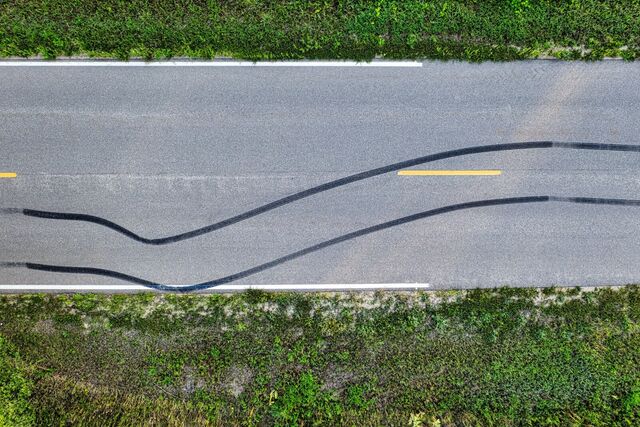
Understeer occurs when the front tyres lose grip before the rear tyres. Instead of following the direction indicated by the steering wheel, the vehicle continues travelling forwards, causing it to run wider than intended through a corner.
According to Eugene Herbert, CEO of MasterDrive, understeer is more commonly experienced in front-wheel-drive vehicles.
"Drivers of front-wheel-drive cars experience it more commonly. If you have not experienced it before, it feels like the steering is disconnected or unresponsive. Ultimately, the driver is turning the wheel, but the car simply is not responding to inputs."
For many drivers, understeer can be confusing because the natural instinct is often to turn the steering wheel more. Unfortunately, this usually makes the situation worse because the front tyres have already exceeded the available grip.
How to Recover from understeer:
The most important response is to remain calm and avoid sudden inputs.
Drivers should ease off the accelerator smoothly and avoid heavy braking, which can further unsettle the vehicle. Reducing steering input slightly can often allow the front tyres to regain grip and begin responding once again. As traction returns, the steering can be adjusted smoothly to guide the vehicle back onto the intended line.
"The key is patience and remaining calm, any harsh or sudden input makes it more difficult to regain control," says Eugene.
What is oversteer?
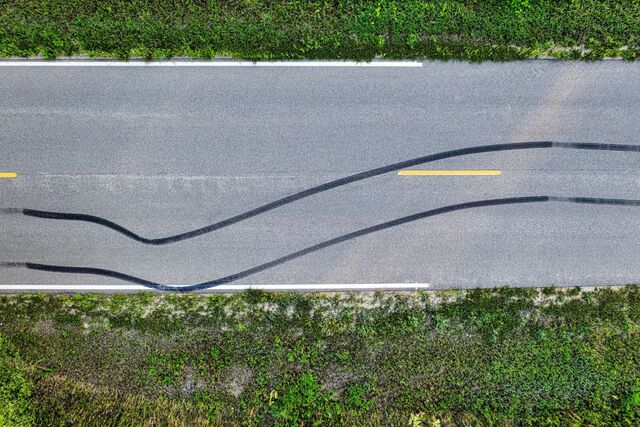
Oversteer is essentially the opposite of understeer. In this case, the rear tyres lose traction before the front tyres, causing the back of the vehicle to slide outward while cornering.
This behaviour is commonly associated with rear-wheel-drive vehicles, although it can occur in any vehicle under the right circumstances. Excessive speed, sudden braking during cornering or aggressive throttle inputs can all contribute to oversteer.
"The rear tyres lose traction, and the back of the car begins to slide outward, pointing the front of the vehicle away from the direction intended."
If not corrected correctly, oversteer can result in the vehicle spinning.
How to recover from oversteer:
Recovering from oversteer requires a quick but measured response. Drivers should steer in the direction of the slide, a technique commonly known as counter-steering. If the rear of the car moves to the right, steer right. If it slides left, steer left.
At the same time, the accelerator should be released gradually rather than abruptly.
"Simultaneously, release the accelerator slowly as a sudden decrease in power can cause a pendulum effect and snap the car in the opposite direction," explains Eugene.
Once the vehicle settles and grip returns, the steering wheel should be straightened smoothly.
The critical role of tyres:
Regardless of the type of vehicle being driven, tyres remain the single most important factor in maintaining grip. They are the only connection between the vehicle and the road surface, making their condition critical to safety.
Incorrect tyre pressures, worn tread and damaged tyres can significantly increase the likelihood of both understeer and oversteer. Regular inspections and timely replacement are essential, while selecting tyres suited to local weather conditions can further improve safety.
Tyre tread also plays a vital role in wet conditions by channelling water away from the contact patch and reducing the risk of aquaplaning.
Weather matters:
Road conditions have a major influence on available grip. Wet roads dramatically reduce traction, while ice and snow create even greater challenges in countries where such conditions occur.
When road conditions deteriorate, drivers should reduce speed, increase following distances and make all steering, braking and acceleration inputs as smooth as possible.
Everyday driving tips:
Many loss-of-control incidents can be prevented through simple driving habits. Drivers should slow down before entering a corner rather than braking heavily while turning. Sudden steering inputs should be avoided, and attention should remain focused on where the vehicle needs to go rather than on potential hazards.
It is also important to remember that all-wheel-drive vehicles are not immune to losing grip. While additional driven wheels may improve traction in certain situations, they cannot overcome the laws of physics.
Most importantly, skid recovery techniques should never be practised on public roads.
"MasterDrive runs specialised skid control courses where these methods are taught and refined in a controlled environment, allowing drivers to experience vehicle dynamics safely and develop the correct responses under professional supervision," says Eugene.
Understanding how vehicles behave when grip is lost can make all the difference when conditions suddenly change, helping drivers respond correctly and reducing the risk of a serious crash.
This Hyundai Motorsport video demonstrates the difference between over- and understeer:
Charging time remains a worry for many South Africans considering an electric vehicle, who still see it as a disruption rather than a quick stop at a filling station. That view is starting to shift.
The winners of the 2026 Automotive Business Council | naamsa Accelerator Awards were announced at the recently held Auto Week 2026, which took place in eThekwini, KZN.
GWM has expanded its local SUV line-up with the introduction of the all-new Haval H7. Replacing the outgoing model, the newcomer blends boxy styling, advanced technology and a choice of petrol, hybrid and plug-in hybrid powertrains, giving buyers a versatile family SUV with genuine all-terrain credentials.
Cars are the ultimate symbol of freedom, independence and individualism. They offer the freedom to ‘go anywhere,’ whenever it suits and with whom one chooses.
The winners of the 2026 Automotive Business Council | naamsa Accelerator Awards were announced at the recently held Auto Week 2026, which took place in eThekwini, KZN.
With the steep rise in fuel prices since March this year leading to historic record highs following massive increases in October, the government intervention annouched this week, is widely welcomed.
Omoda has confirmed that the new C4 will become the first model from the Chery Group to be built in South Africa, with production set to take place at the company's Rosslyn manufacturing facility in Gauteng.