

Chery names its first bakkie Grootman
Chery has named its first bakkie for South Africa Grootman, a name chosen by South Africans. The model is planned to make its local debut in the first quarter of 2027.
- Product News
- 2 October 2026
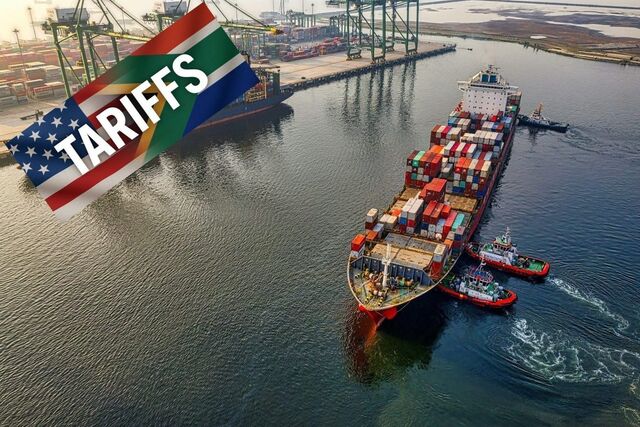
Vehicle exports to the US – South Africa’s second-largest trading partner and a key destination for locally manufactured premium models – have plummeted by 82.2% in the first half of the year compared to the first half of 2024.
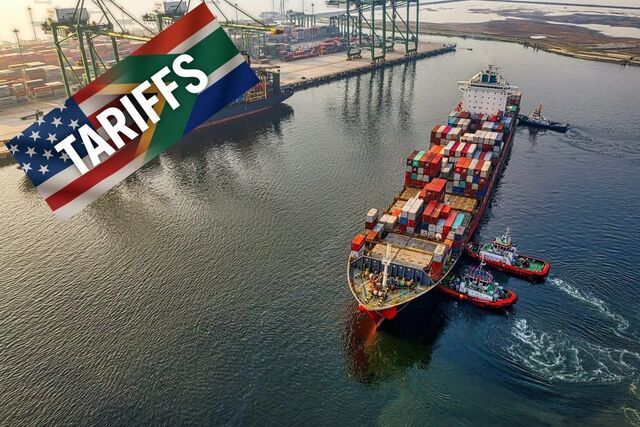
This delt a significant blow to production volumes and supplier networks. “The reimposition of these tariffs is deeply disappointing and has far reaching implications. Without urgent trade remedy, the socio-economic fallout could be severe,” says Mikel Mabasa, CEO of The Automotive Business Council (naamsa) in reaction to the USA’s imposed tariffs on South African vehicle exports to the country.
Despite the effects of the 25% automotive tariffs imposed in April 2025, vehicle exports in general have displayed notable resilience. Export volumes for July 2025 decreased by 677 units, or 1.9% from the 36 056 units exported in July 2024 to 35 379 units exported in July 2025.
The resilience reflects the sector’s expanded global reach to over 109 markets for vehicle exports in 2024 – leveraging long-standing trade relationships, among others. However, pressure is mounting as other export-orientated nations begin redirecting their products to South Africa’s established markets.

“South Africa’s automotive industry has long relied on the strength of its export engine to drive production, attract investment and create high-value employment. The current environment has tested that model – but our ability to maintain solid export volumes amid escalating trade uncertainty demonstrates the commitment of our OEMs to South Africa’s industrial base,” Mikel adds.
The new-vehicle sales for July are released as the sector absorbs confirmation of the reimposition of a 30% tariff on general South African exports to the United States, set to take effect from 07 August 2025.
This follows the initial implementation of the 25% Section 232 tariffs on automotive products in April 2025. While most other trading partners have secured reduced tariffs, South Africa finds itself at a relative disadvantage, having been unable to secure preferential terms over months of negotiations.
For South Africa’s automotive sector – already bearing the brunt of a sharp export contraction to the US market in the first half of 2025 – this latest development cements a competitiveness blow and a relative loss of competitiveness as peer countries retain or negotiate lower rates. Although some sectors, such as base metals, will remain largely exempt, the automotive industry stands exposed, both in immediate volumes and long-term market access.
He says the new tariffs now formalised and taking effect within days is a disappointing blow. “We are not giving up on the US market – but we must now also look to deepen regional trade, expand market access in Africa and Asia, and accelerate the roll-out of South Africa’s NEV-transition strategy to attract new investment and safeguard production capacity,” Mikel says.
Import statistics:
Chery has named its first bakkie for South Africa Grootman, a name chosen by South Africans. The model is planned to make its local debut in the first quarter of 2027.
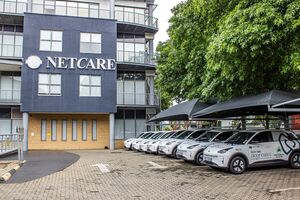
Netcare Diagnostics (a Netcare Group business) is introducing its first fully electric vehicles to its transport fleet, starting with shorter urban routes for collecting patient pathology specimens.
South Africa’s new vehicle market recorded aggregate domestic sales of 61 645 units in September 2026, an increase of 12.7% compared with the 54 706 units sold during September 2025.
 Advertisement
 Advertisement
Cars are the ultimate symbol of freedom, independence and individualism. They offer the freedom to ‘go anywhere,’ whenever it suits and with whom one chooses.
Sarah Redshaw
Netcare Diagnostics (a Netcare Group business) is introducing its first fully electric vehicles to its transport fleet, starting with shorter urban routes for collecting patient pathology specimens.
South Africa’s new vehicle market recorded aggregate domestic sales of 61 645 units in September 2026, an increase of 12.7% compared with the 54 706 units sold during September 2025.
SA Auto Week 2026 is scheduled to take place in eThekwini, KwaZulu-Natal, from 13 to 16 October, with the event marking five years of SA Auto Week.