

Chery names its first bakkie Grootman
Chery has named its first bakkie for South Africa Grootman, a name chosen by South Africans. The model is planned to make its local debut in the first quarter of 2027.
- Product News
- 2 October 2026
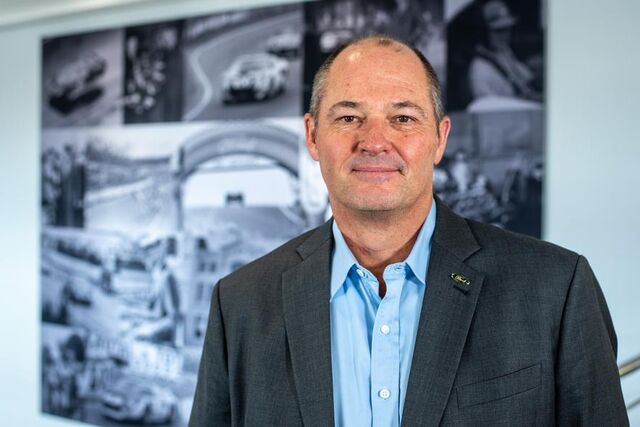
In his industry opening address on 26 October, Neale Hill, the President of Ford Africa and President of naamsa, did not sugarcoat the current state of affairs in the South African auto milieu and was often highly critical of government.
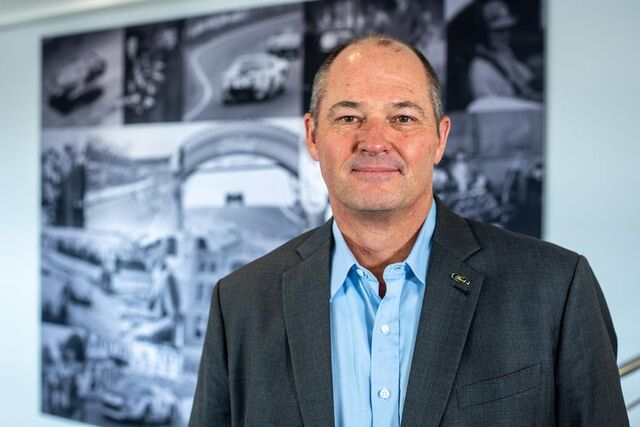
He briefly reviewed the negative impact COVID-19 had on the automotive industry and lauded the industry and its employees for their resilience during the crisis.
He then highlighted other events that severely affected value chains such as the global shortage of semiconductors, persistent supply chain interruptions, the impact of the Ukraine-Russian war, the well-documented unrest that played out in KZN and Gauteng in July 2021, cyber and network attacks on Transnet, the country’s continuing power supply challenges and the devastating flooding in KZN.
“The past two and a half years have been exceptionally challenging for our sector with an array of external factors impacting us in such a short time. It is remarkable how resilient we have been. But we have stayed the course and retained many industry jobs,” said Hill.
He said that the domestic new vehicle market will only return to its pre-pandemic levels in 2023 and that globally it might even take “a year or two longer”. Hill ominously said that this was not good news for South Africa considering the industry’s substantial contribution to GDP.
He then climbed into government: “The key priority focus for government must be to create an environment conducive to attract investments into the manufacturing sector aimed at unlocking the country’s real economic potential and ensuring creating the jobs the country so desperately needs. However, government is simply moving too slow,” said Hill.
He then lamented the escalating energy crisis and increasing water shortages.
“It’s becoming extremely difficult for OEMs to convince head offices to consider South Africa as an attractive destination for the much-needed investment for our country with the escalating duration and intensity of load-shedding as well as the deteriorating costly and inefficient logistics infrastructure,” he warned.
He also said the industry will be requesting a review of the APDP2 policy framework’s deadline dates with regard to initial objectives, as they were “not realistic” according to Hill. For example, he cited the target of increased vehicle production of 250% by 2025 considering “the severe impact of COVID-19 and current disruptions in the country”.
He also said that despite the global banning of IEC vehicles and the increased demand for new energy vehicles (NEV), clarity is still lacking on the support from government for the local inevitable transition to NEVs. He warned that the local industry will lose about 18% of its exports of locally produced vehicles and components because of this. Hill noted that even African countries, such as Morocco and Egypt, were surpassing South Africa in the NEV space.
“South Africa continues to miss out,” said Hill.
He said the only way for South Africa to sustain and grow its automotive industry is to stand out to attract any new project investments, but that the country “keeps lagging further and further behind”.
“The industry is battling with current rail and port infrastructure costs and inefficiencies. Not to mention the effect of the recent Transnet strike on the economy and the unrealistic union expectations,” said Hill.
In conclusion, he said that there would not be an automotive industry in South Africa without a government support programme. He warned that South Africa could go the same route as Australia whose automotive industry came to an end in 2019 after the Australian government stopped supporting it.
Chery has named its first bakkie for South Africa Grootman, a name chosen by South Africans. The model is planned to make its local debut in the first quarter of 2027.
Netcare Diagnostics (a Netcare Group business) is introducing its first fully electric vehicles to its transport fleet, starting with shorter urban routes for collecting patient pathology specimens.
South Africa’s new vehicle market recorded aggregate domestic sales of 61 645 units in September 2026, an increase of 12.7% compared with the 54 706 units sold during September 2025.
 Advertisement
 Advertisement
You can't buy happiness but you can buy cars and that's kind of the same thing.
Unknown
Netcare Diagnostics (a Netcare Group business) is introducing its first fully electric vehicles to its transport fleet, starting with shorter urban routes for collecting patient pathology specimens.
South Africa’s new vehicle market recorded aggregate domestic sales of 61 645 units in September 2026, an increase of 12.7% compared with the 54 706 units sold during September 2025.
SA Auto Week 2026 is scheduled to take place in eThekwini, KwaZulu-Natal, from 13 to 16 October, with the event marking five years of SA Auto Week.