SKD operations refer to a manufacturing and export method where products - most commonly vehicles or major equipment are shipped to a destination market in a partially disassembled state and finished at a local assembly facility.
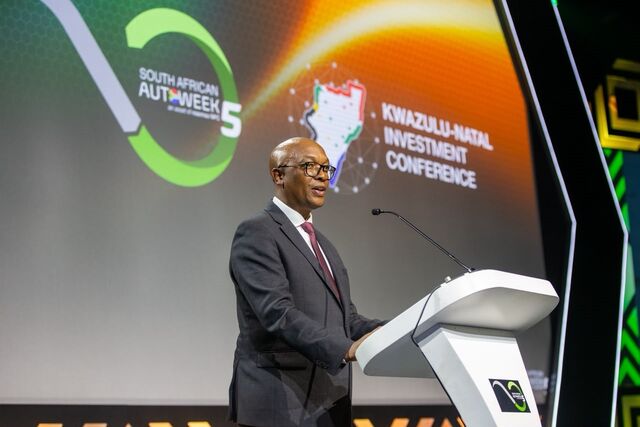
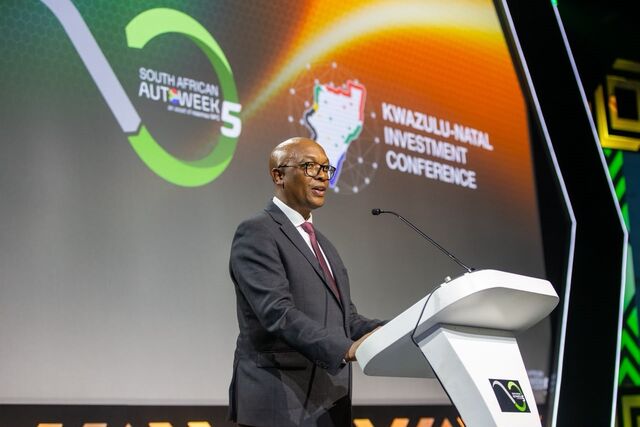
Speaking at the SA Auto Week event in Durban on Thursday, the Minister said this decision comes as the government, working with the Automotive Business Council | naamsa, the National Association of Automotive and Component and Allied Manufacturers (Naacam) and organised labour unions, reviews the Automotive Production Development Programme (APDP2).
As part of this process, and informed by engagements with industry stakeholders, an APDP modelling study has been undertaken to review the programme and identify possible short-term interventions to enhance the competitiveness of domestic vehicle manufacturers in relation to importers of fully built units.
Parks explained that this development will exclude Medium and Heavy commercial vehicles.
“We will work to strengthen the legal definitions around what we determine as Complete-Knock-Down (CKD) manufacturing. We have agreed that the strategic competitiveness of South Africa’s ladder frame of the Light Commercial Vehicle (LCV) segment warrants formal investigation.
“There was also alignment that any additional protection should be accompanied by reciprocal commitments relating to production, localisation, employment, transformation, exports, and investment. I will be instructing the International Trade Administration Commission of South Africa (ITAC) to undertake this investigation to reach a final determination on the matter,” he said.
According to the Department of Trade, Industry and Competition, the proposed interventions include the following:
- A review of the ad valorem tax structure to create clearer differentiation between locally produced and imported vehicles. This may involve adjustments to the tax base and the local adjustment factor to support domestic production competitiveness.
- Measures to address structural imbalances within the APDP, particularly regarding the operation and accumulation of Production Rebate Certificates (PRCs), to strengthen localisation incentives.
- Consideration of revisions to the Volume Assembly Local Allowance (VALA) parameters to better align incentives with broader industrial policy objectives.
- Regulatory refinements related to Semi Knocked Down (SKD) operations, including the introduction of potential time-bound provisions to encourage a transition towards higher-value Complete Knocked Down (CKD) production.
The Minister acknowledged that the current period is the greatest turning point this sector has faced in a century, and the way vehicles are powered, built, owned and used is changing all at once.
He further indicated that New Energy Vehicles and South Africa’s commitment to carbon emission targets, as well as the Critical Minerals Beneficiation Strategy, are key focus areas in placing the sector on a path to success.
“If we do not build the vehicles that markets such as Europe and the United Kingdom will buy, we will lose those markets, and with them our plants and our jobs. At home, in the first seven months of this year, South Africans bought almost as many new energy vehicles as in the whole of last year.
“The automotive industry is where the beneficiation strategy meets our reindustrialisation programme. Every new energy vehicle sold today will one day reach the end of its life, and so will its battery.
“Government has begun work on an End-of-Life Vehicle policy, as part of the decarbonisation pathway in our Industrial Development Strategy. Recycling batteries and giving them a second life is a new industry in its own right. South Africa intends to build it from the start,” Parks concluded, according to SAnews.gov.za
The overall SKD review follows calls from local vehicle manufacturers for incentive and policy changes that would favour deeper manufacturing activity and protect local producers from imports. Earlier this year, BMW Group South Africa CEO Peter van Binsbergen, who is also the President of naamsa, said the industry had urged the government to close what he described as an SKD “loophole.”
“SKD manufacturers are coming in close to duty-free because they’re using aftermarket categories to import the engine duty-free, for example, and they’re actually having a very easy time here in South Africa without creating any investments and hardly creating any jobs,” Peter said according to the new agency.
Toyota South Africa Motors CEO Andrew Kirby said in July that the country’s automotive sector had evolved beyond the need for SKD operations and warned that assembling vehicles from kits risked undermining larger investments in full-scale production.
“So, our strong request is that we phase out SKD in South Africa and that we strengthen the competitiveness of CKD, so that we can have a better balance between locally produced vehicles and imported vehicles,” Andrew said according to the Reuters report.
It is also stated by government that the South African Automotive Master Plan aims to raise local content to 60% from the current average of 38%, double employment in the sector and increase South Africa’s share of global vehicle output to 1% by 2035.