
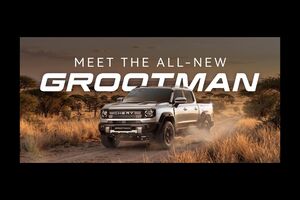
Chery names its first bakkie Grootman
Chery has named its first bakkie for South Africa Grootman, a name chosen by South Africans. The model is planned to make its local debut in the first quarter of 2027.
- Product News
- 2 October 2026
More than 4 300 underprivileged school children in Pretoria and Gqeberha will benefit from an initiative by Ford SA and the non-profit organisation, Future Families, as well as the shoe manufacturer, Veldskoen Shoes.
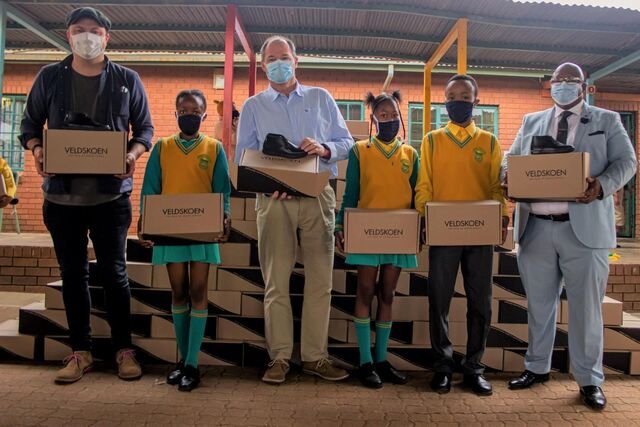
The first batch of 1 010 pairs of shoes was recently handed over to the Ramahlale Primary School in Mamelodi, near Ford’s Silverton Assembly Plant.
Ford provided a grant of R1 million for the project to Future Families, which operates the Ford Resource and Engagement Centre (FREC) in Mamelodi. The centre provides free skills development and training to the local community through grants from the Ford Motor Company Fund and Ford South Africa.
Through the R1 million donation, Ford SA and Future Families collaborated with Veldskoen Shoes to produce 4 300 pairs of black leather shoes that will be donated to Ramahlale Primary School and Gatang High School in Mamelodi, as well as Missionvale UCC Primary School, Sipho Hashe Primary School and WB Tshume Primary School in Gqeberha, near Ford’s Struandale Engine Plant.
Veldskoen is a Cape Town-based company that manufactures a range of handcrafted leather shoes locally and is the official off-field shoe supplier to the South African team at this year’s Tokyo Olympics.
“Education is an essential part of empowering and uplifting people and is a key focus area for Ford in supporting the communities in which we operate,” says Neale Hill, MD of Ford South Africa. “However, South Africa’s underprivileged youth face numerous challenges, not least of which is the fact that many learners are forced to attend school without a decent pair of shoes, or any shoes at all.
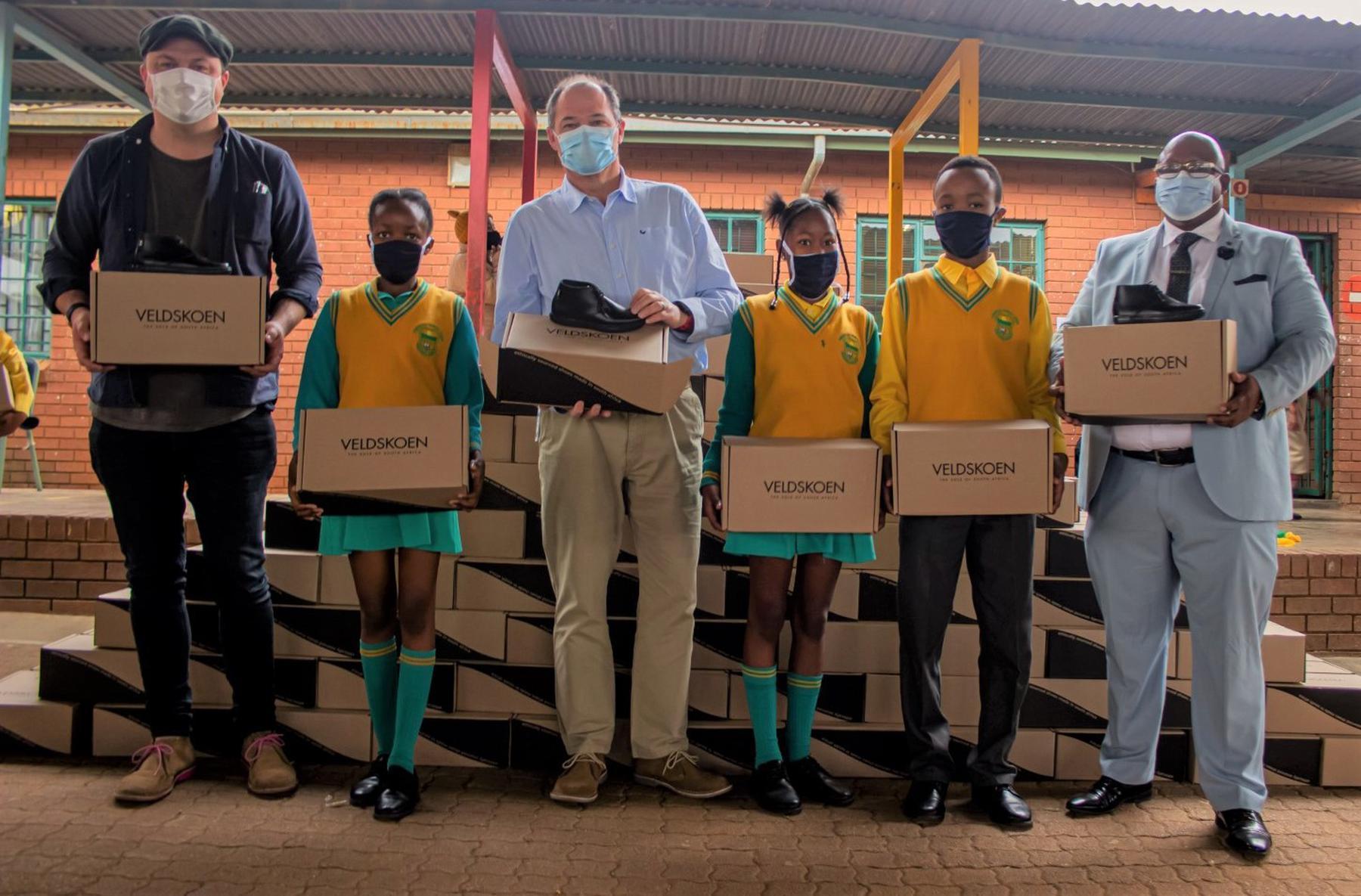
Veldskoen specially developed a durable black shoe for this project based on its popular Heritage Shoe range. The unique black school shoe proudly carries the Ford and Veldskoen logos on the in-soles, as well as the South African flag stitched on the outside.
The shoes are manufactured at the company’s factory in Durban and required a total of 3 124 metres of leather, 1 950 kg of thermoplastic rubber for the soles, shoelaces spanning 4.3 km, and 4 300 pairs of EVA socks (or in-soles).
Although Veldskoen’s children’s shoe range normally only goes down to a child’s size nine, Ford and Future Families challenged them to create school shoes that start from size five to cater for the youngest learners.
“We are immensely proud and grateful for the opportunity to collaborate with a company like Ford on a project that spreads good to South Africa’s children,” says Nick Dreyer, CEO of Veldskoen Shoes.
Penny Learmonth, Executive Director of Future Families, adds: “COVID-19 has brought added financial pressure to many families and meeting their everyday needs is difficult. This opportunity offered by Ford South Africa will bring sunshine to many families.”
Chery has named its first bakkie for South Africa Grootman, a name chosen by South Africans. The model is planned to make its local debut in the first quarter of 2027.
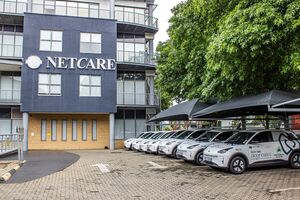
Netcare Diagnostics (a Netcare Group business) is introducing its first fully electric vehicles to its transport fleet, starting with shorter urban routes for collecting patient pathology specimens.
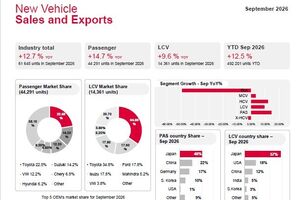
South Africa’s new vehicle market recorded aggregate domestic sales of 61 645 units in September 2026, an increase of 12.7% compared with the 54 706 units sold during September 2025.
 Advertisement
 Advertisement
I have bad reflexes. I was once run over by a car being pushed by two guys
Woody Allen
Netcare Diagnostics (a Netcare Group business) is introducing its first fully electric vehicles to its transport fleet, starting with shorter urban routes for collecting patient pathology specimens.
South Africa’s new vehicle market recorded aggregate domestic sales of 61 645 units in September 2026, an increase of 12.7% compared with the 54 706 units sold during September 2025.
SA Auto Week 2026 is scheduled to take place in eThekwini, KwaZulu-Natal, from 13 to 16 October, with the event marking five years of SA Auto Week.