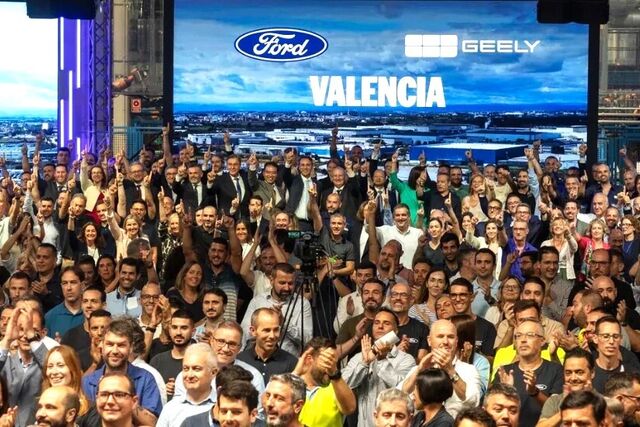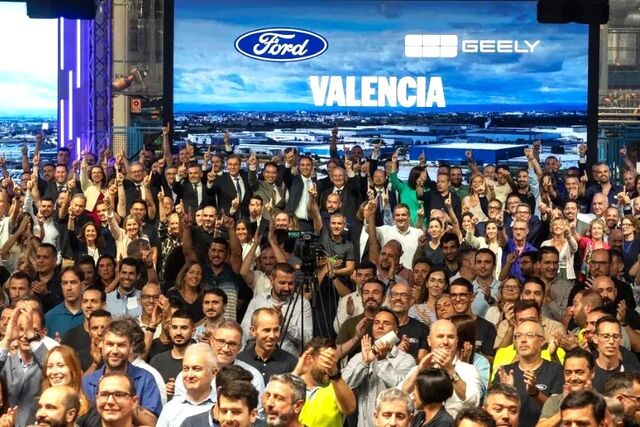
The first Geely branded electric SUVs are scheduled to roll off the production line in 2028. This will be Geely’s first production facility in Europe, according to Reuters.
Ford’s workforce will become employees of the new venture, and more staff are expected to be required as production increases. Geely does not plan to bring workers from China. Jim Baumbick, Ford’s European head, says the aim is to fully utilise the facility. The two companies have been in talks for months, with their long relationship dating back to Geely’s purchase of Volvo Cars from Ford in 2010 helping to facilitate the agreement.
Such cooperation would not be possible in Ford’s home market, where legislation is being toughened to block Chinese automakers. United States (US) Representative John Moolenaar criticised the partnership, saying it would enable China’s decimation of auto markets in Europe. Ford responded that the European market is changing rapidly and competition with Chinese and other global automakers requires leaner and smarter operations.
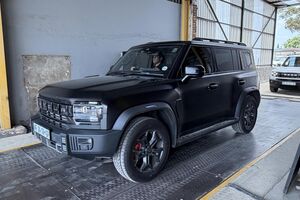
Victor Yang, Geely’s Senior Vice President, confirmed that the first model to be produced in Valencia will be the EX5, already sold in Europe, while the second vehicle is still in development. He emphasised the need for strong partners to support localisation efforts.
Spain is an attractive location for Chinese automakers because it is Europe’s second largest car manufacturing country after Germany, with lower labour and energy costs. BYD has placed Spain on its shortlist, Leapmotor will produce an electric SUV at Stellantis’ Zaragoza plant, and Hongqi has been in talks with Stellantis about building cars in Spain, reports suggest.
Unions have expressed cautious optimism, stressing that promises of job creation and engagement with local suppliers must be fulfilled. Juan Jose Picazo of the CCOO Industrial Union says it is essential that technology and supply chains remain in Spain to generate employment.
Ford has faced declining sales in Europe, falling from more than 1 million cars a decade ago to just over 426 000 last year, dropping from fourth to eighth place among automakers.
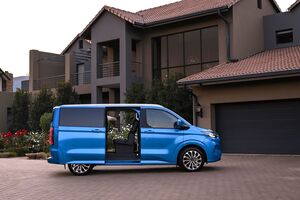
The Valencia plant, which has capacity for five hundred thousand vehicles annually, was operating at only 26 per cent capacity in 2025. Ford currently produces only the Kuga SUV there but plans to add the Bronco SUV in 2028. Jim Baumbick states there are no hard constraints on how much of the factory’s capacity Geely can use.
The two companies will also jointly develop a crossover SUV with multiple powertrain options, including fully electric, plug-in-hybrid and extended range electric versions, with production beginning in 2028.
Recent reports from Reuters and South African automotive news platform, Dealerfloor, show that at least five European legacy carmakers now have production partnerships with Chinese automakers. BYD is negotiating with Stellantis to use underutilised factories and already accounts for 2.2 per cent of European Union car registrations between January and April 2026.
Chery holds a 40 per cent stake in a joint venture with Spanish carmaker EBRO at a former Nissan plant in Barcelona, with production expected to begin in late 2026 or early 2027, targeting 30 000 cars annually. Chery also bought Nissan’s manufacturing plant in South Africa with the first Chery models expected to roll of the line in 2027.
FAW’s Hongqi brand is in talks with Stellantis to build vehicles in Spain and plans to launch more than twelve electric and hybrid models by 2028. Leapmotor has partnered with Stellantis to produce EVs at Zaragoza. Geely is confirmed at Ford’s Valencia plant and also has presence in Europe through Volvo, Polestar, Lotus, Lynk & Co and Zeekr.
Ten planned production facilities have been announced since 2023, with Spain, Hungary and Turkey being the main focus. Chinese battery electric vehicle production in Europe is expected to rise from 350 000 units in 2025 to 850 000 units by 2035.
(Photo: Ford Valencia).