
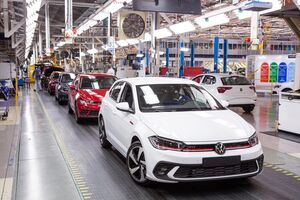
Volkswagen Group Africa sets new monthly production record
In the latest of a series of milestone achievements, Volkswagen Group Africa (VWGA) has set a new record for the number of vehicles built in one month.
- Industry News
- 20 August 2026
Toyota will introduce high-performance, solid-state batteries and other technologies to improve the driving range and cut costs of future electric vehicles (EVs), according to Reuters.

This followed an announcement made by the auto manufacturer on the same day.
The Japanese giant's technology roadmap, covering aspects as varied as next-generation battery development and a radical redesign of factories, amounted to the automaker's fullest disclosure of its plan to compete in the fast-growing market for EVs where it has lagged rivals led by Tesla.
The plan came a day before an annual shareholders meeting where governance and strategy – including a slow pivot to battery EVs under former CEO Akio Toyoda – would be scrutinised.
Shares of the world's best-selling automaker jumped 5% on the day to 2 173 yen, the highest since August.
Toyota said it aimed to launch next-generation lithium-ion batteries from 2026, offering longer ranges and quicker charging.
It also trumpeted a "technological breakthrough" that addresses durability problems in solid-state batteries and said it was developing means to mass-produce these batteries, targeting commercialisation over 2027-2028.
Solid-state batteries can store more energy than current liquid electrolyte batteries. Automakers and analysts expect them to speed up transition to EVs by addressing a major consumer concern: range.
Still, these batteries are expensive and likely to remain so for years. Toyota will hedge with better-performing lithium-iron phosphate batteries, a cheaper alternative to lithium-ion batteries that have spurred EV adoption in China, the world's largest vehicle market.
At the high end of the market, Toyota said it would produce an EV with a more efficient lithium-ion battery, offering a range of 1 000 km (621 miles). By comparison, the long-range version of the lithium-ion-powered Tesla Model Y, the world's best-selling EV, can drive for about 530 km based on US standards.
An EV powered by a solid-state battery has a range of 1 200 km and charging time of just 10 minutes, Toyota said. By comparison, the Tesla Supercharger network – the largest of its kind – offers the equivalent of 321 km of charge in 15 minutes.
Toyota did not divulge the expected costs or required investment for the plans.
The roadmap detailed on Tuesday showed that under new CEO, Koji Sato, Toyota has adopted much of the revamp that engineers and planners have been developing as options for months.
This includes use of electric-axle and other technology from suppliers such as Aisin and Denso.
"What we want to achieve is to change the future with BEVs," Takero Kato, president of new Toyota EV unit BEV Factory, said in a video posted on the automaker's YouTube channel on Tuesday.
Toyota said it was developing a dedicated EV platform to reduce the cost of new models and a heavily automated assembly line that would do away with the conveyor belt system that has defined auto production since the days of Henry Ford over 100 years ago.
In Toyota's "self-propelling" assembly line, cars under production will drive themselves through the process.

In the latest of a series of milestone achievements, Volkswagen Group Africa (VWGA) has set a new record for the number of vehicles built in one month.
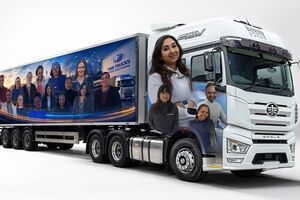
As South Africa celebrates Women’s Month, FAW Trucks Southern Africa is highlighting the changing role of women in the transport and logistics industry and their growing contribution across the sector.
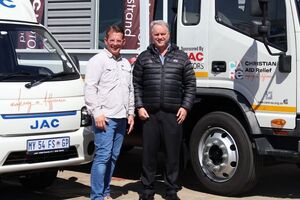
JAC Motors South Africa has strengthened its long-standing partnership with Christian Aid Relief (CARE) by donating two trucks to support the organisation’s humanitarian work.
 Advertisement
 Advertisement
Have you ever noticed that anybody driving slower than you is an idiot, and anyone going faster than you is a maniac?
George Carlin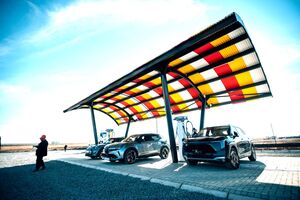
Three months after launching its off-grid, solar-powered electric vehicle (EV) charging network on the N3 corridor, Zero Carbon Charge (CHARGE) has confirmed plans to double charging capacity at both Charge hubs.
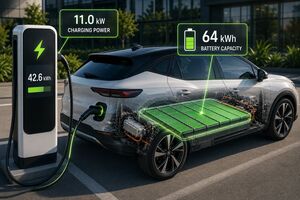
Electric vehicles (EVs) have introduced a whole new vocabulary into motoring. Instead of simply talking about litres of fuel, cylinders and kilometres per tank, motorists are now confronted with kW, kWh, AC, DC, WLTP, regenerative braking and a host of other terms.
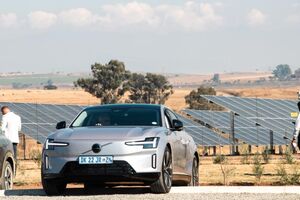
Zero Carbon Charge (CHARGE), which is building a national network of off grid, ultra-fast EV charging stations powered by renewable energy, has welcomed the latest new energy vehicle (NEV) sales figures, saying they confirm a trend it has tracked for several years.