
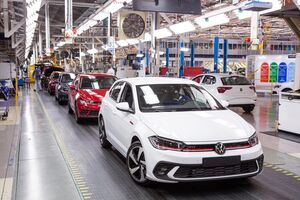
Volkswagen Group Africa sets new monthly production record
In the latest of a series of milestone achievements, Volkswagen Group Africa (VWGA) has set a new record for the number of vehicles built in one month.
- Industry News
- 20 August 2026
Stellantis has announced its decision to discontinue its hydrogen fuel cell technology development programme.
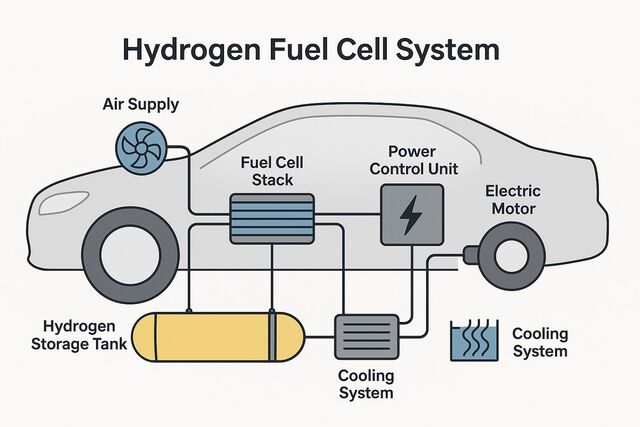
Owing to the limited availability of hydrogen refuelling infrastructure, high capital requirements, and the need for stronger consumer purchasing incentives, the Company does not anticipate the adoption of hydrogen-powered light commercial vehicles before the end of the decade.
As a result, Stellantis will no longer launch its new range of hydrogen-powered Pro One vehicles this year. Serial production was scheduled to start this summer in Hordain, France (medium-sized vans) and Gliwice, Poland (large vans).
“In a context where the Company is mobilising to respond to demanding CO2 regulations in Europe, Stellantis has decided to discontinue its hydrogen fuel cell technology development programme,” explains Jean-Philippe Imparato, Chief Operating Officer for Enlarged Europe.
“The hydrogen market remains a niche segment, with no prospects of mid-term economic sustainability. We must make clear and responsible choices to ensure our competitiveness and meet the expectations of our customers with our electric and hybrid passenger and light commercial vehicles’ offensive.”
This decision will not impact staffing at Stellantis’s production sites. R&D activities related to hydrogen technology will be redirected to other projects.
The current state of the hydrogen segment also presents financial challenges for various stakeholders. In this context, Stellantis has initiated discussions with the shareholders of Symbio to evaluate the current market consequences and to preserve the best interests of Symbio, in line with their respective obligations.
In the latest of a series of milestone achievements, Volkswagen Group Africa (VWGA) has set a new record for the number of vehicles built in one month.
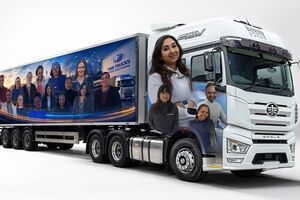
As South Africa celebrates Women’s Month, FAW Trucks Southern Africa is highlighting the changing role of women in the transport and logistics industry and their growing contribution across the sector.
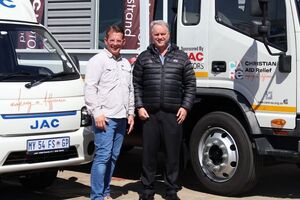
JAC Motors South Africa has strengthened its long-standing partnership with Christian Aid Relief (CARE) by donating two trucks to support the organisation’s humanitarian work.
 Advertisement
 Advertisement
You can't buy happiness but you can buy cars and that's kind of the same thing.
Unknown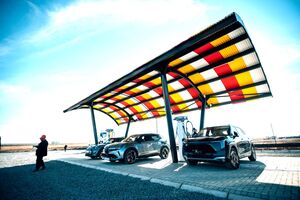
Three months after launching its off-grid, solar-powered electric vehicle (EV) charging network on the N3 corridor, Zero Carbon Charge (CHARGE) has confirmed plans to double charging capacity at both Charge hubs.
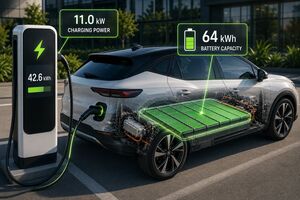
Electric vehicles (EVs) have introduced a whole new vocabulary into motoring. Instead of simply talking about litres of fuel, cylinders and kilometres per tank, motorists are now confronted with kW, kWh, AC, DC, WLTP, regenerative braking and a host of other terms.
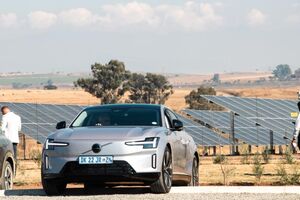
Zero Carbon Charge (CHARGE), which is building a national network of off grid, ultra-fast EV charging stations powered by renewable energy, has welcomed the latest new energy vehicle (NEV) sales figures, saying they confirm a trend it has tracked for several years.