
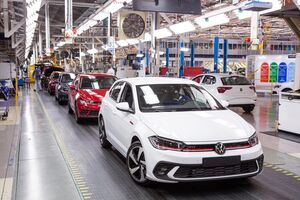
Volkswagen Group Africa sets new monthly production record
In the latest of a series of milestone achievements, Volkswagen Group Africa (VWGA) has set a new record for the number of vehicles built in one month.
- Industry News
- 20 August 2026
Spain will channel an impressive R27.6 billion into its electric vehicle (EV) sector next year, as part of a bold initiative to ensure that 95% of vehicles produced in the country are electric by 2035, Prime Minister Pedro Sánchez confirmed recently.

Current figures highlight the scale of the challenge: during the first ten months of 2025, only 10% of vehicles manufactured in Spain were fully electric or plug-in hybrids, while self-charging hybrids accounted for 26.7%. By comparison, across the European Union, around 20% of vehicles sold last year fell into the fully electric or plug-in hybrid category.
The Spanish government’s plan includes R8.5 billion in direct subsidies for consumers purchasing EVs in 2026, alongside R12.3 billion through an EU-backed programme to stimulate industrial investment. A further R6.4 billion will be allocated to expanding charging infrastructure along roads that remain underserved.
This decisive move comes as Chinese EV giants such as BYD gain ground in Europe, undercutting local manufacturers and exploiting Spain’s lack of a dominant domestic car brand. Sánchez stressed that the strategy is designed to protect jobs during the transition to EV production and to maintain Spain’s status as Europe’s second-largest car producer.
Foreign investment is already reshaping Spain’s battery industry, with projects like Chinese firm CATL’s R85 billion plant in partnership with Stellantis creating thousands of jobs. However, Sánchez cautioned that without robust domestic support, Spain risks losing technological expertise and market share.
Under the roadmap, Spain aims for 100% electrified vehicle sales by 2035, signalling a transformative shift towards sustainable transport.

In the latest of a series of milestone achievements, Volkswagen Group Africa (VWGA) has set a new record for the number of vehicles built in one month.
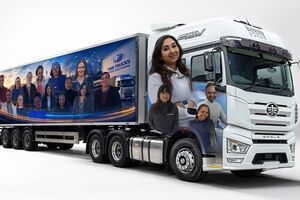
As South Africa celebrates Women’s Month, FAW Trucks Southern Africa is highlighting the changing role of women in the transport and logistics industry and their growing contribution across the sector.
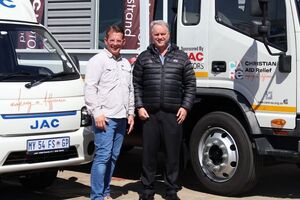
JAC Motors South Africa has strengthened its long-standing partnership with Christian Aid Relief (CARE) by donating two trucks to support the organisation’s humanitarian work.
 Advertisement
 Advertisement
Have you ever noticed that anybody driving slower than you is an idiot, and anyone going faster than you is a maniac?
George Carlin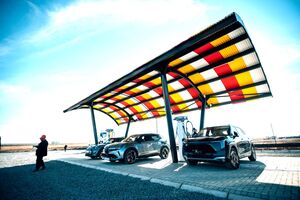
Three months after launching its off-grid, solar-powered electric vehicle (EV) charging network on the N3 corridor, Zero Carbon Charge (CHARGE) has confirmed plans to double charging capacity at both Charge hubs.
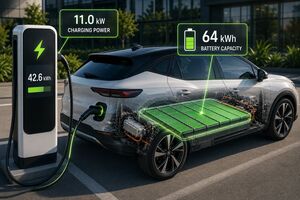
Electric vehicles (EVs) have introduced a whole new vocabulary into motoring. Instead of simply talking about litres of fuel, cylinders and kilometres per tank, motorists are now confronted with kW, kWh, AC, DC, WLTP, regenerative braking and a host of other terms.
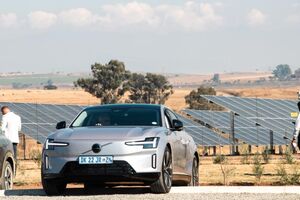
Zero Carbon Charge (CHARGE), which is building a national network of off grid, ultra-fast EV charging stations powered by renewable energy, has welcomed the latest new energy vehicle (NEV) sales figures, saying they confirm a trend it has tracked for several years.