
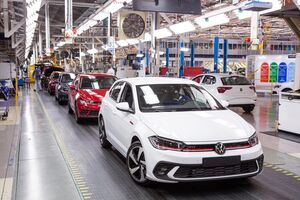
Volkswagen Group Africa sets new monthly production record
In the latest of a series of milestone achievements, Volkswagen Group Africa (VWGA) has set a new record for the number of vehicles built in one month.
- Industry News
- 20 August 2026
Zero Carbon Charge (CHARGE), South Africa’s first company to pioneer a national network of off-grid, solar-powered ultra-fast electric vehicle (EV) charging stations, announced a R100 million equity investment from the Development Bank of Southern Africa (DBSA).
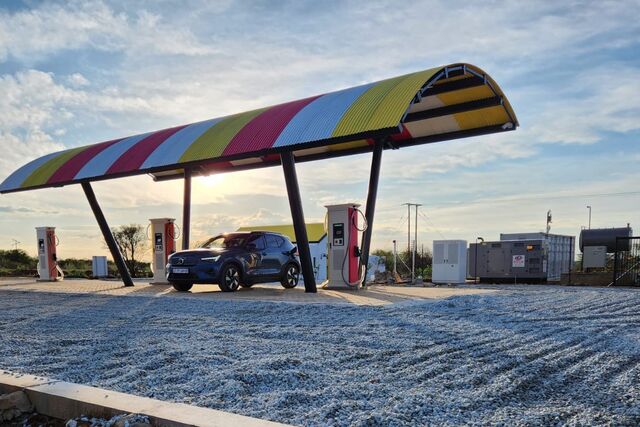
This strategic investment marks a significant endorsement of CHARGE’s mission to build climate-resilient infrastructure and accelerate South Africa’s transition to a net-zero transport economy, the company says.
“This show of faith by the DBSA is not just financial — it is symbolic. We are truly grateful,” says Andries Malherbe, Director and Co-founder of CHARGE.
The funding will enable the roll-out of CHARGE’s ultra-fast charging stations every 150km along all national roads. Each site is fully off-grid, powered by solar energy and supported by battery storage — eliminating reliance on Eskom and addressing range anxiety for EV drivers across the country.
Lebogang Seperepere, Acting Group Executive for Project Preparation at the DBSA, commented: “As the DBSA we continue to work with our partners to find solutions that benefit the economy and society at large. We are happy to have invested R100 million in support of Zero Carbon Charge’s off-grid EV charging, which will not only assist in growing the EV market in South Africa, but also create jobs, support the economy and mitigate climate change.”
Beyond clean transport, CHARGE’s model creates meaningful impact to the rural economy:
• Landowners receive 5% of annual electricity revenue, offering a stable income stream, especially during climate volatility.
• Local jobs and farm stalls are supported around each site, anchoring economic growth in rural communities.
“I commend the DBSA for its unwavering professionalism and commitment throughout the due diligence process,” says Joubert Roux, Founder of Zero Carbon Charge. “We are honoured by their support and are determined to deliver.”
The DBSA’s Product Innovation Unit is designed to back catalytic infrastructure projects that deliver environmental and socio-economic returns at a macro scale. CHARGE’s integrated approach—combining renewable energy, clean mobility and inclusive rural development — exemplifies this mandate.
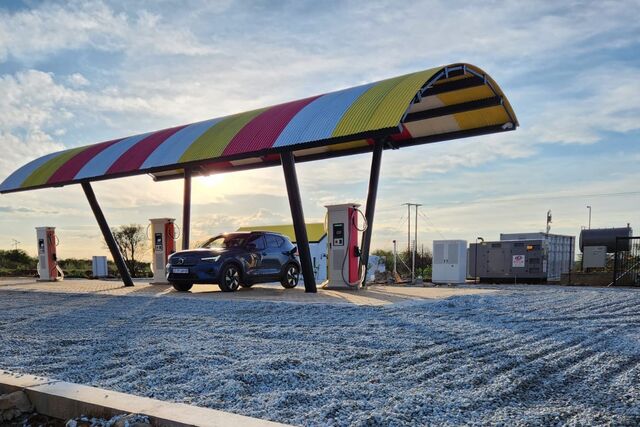
In the latest of a series of milestone achievements, Volkswagen Group Africa (VWGA) has set a new record for the number of vehicles built in one month.
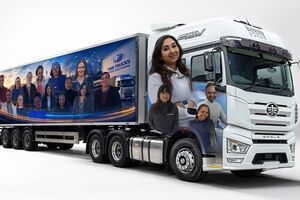
As South Africa celebrates Women’s Month, FAW Trucks Southern Africa is highlighting the changing role of women in the transport and logistics industry and their growing contribution across the sector.
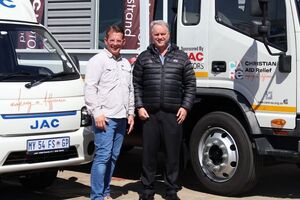
JAC Motors South Africa has strengthened its long-standing partnership with Christian Aid Relief (CARE) by donating two trucks to support the organisation’s humanitarian work.
 Advertisement
 Advertisement
Cars are the ultimate symbol of freedom, independence and individualism. They offer the freedom to ‘go anywhere,’ whenever it suits and with whom one chooses.
Sarah Redshaw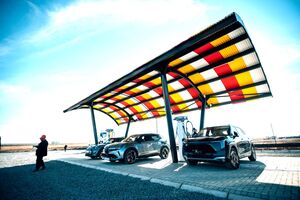
Three months after launching its off-grid, solar-powered electric vehicle (EV) charging network on the N3 corridor, Zero Carbon Charge (CHARGE) has confirmed plans to double charging capacity at both Charge hubs.
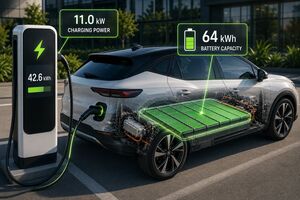
Electric vehicles (EVs) have introduced a whole new vocabulary into motoring. Instead of simply talking about litres of fuel, cylinders and kilometres per tank, motorists are now confronted with kW, kWh, AC, DC, WLTP, regenerative braking and a host of other terms.
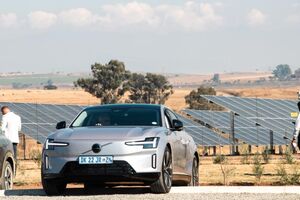
Zero Carbon Charge (CHARGE), which is building a national network of off grid, ultra-fast EV charging stations powered by renewable energy, has welcomed the latest new energy vehicle (NEV) sales figures, saying they confirm a trend it has tracked for several years.