
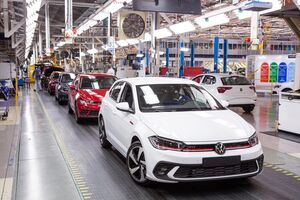
Volkswagen Group Africa sets new monthly production record
In the latest of a series of milestone achievements, Volkswagen Group Africa (VWGA) has set a new record for the number of vehicles built in one month.
- Industry News
- 20 August 2026
Range Rover opened the waiting list for its highly anticipated Range Rover Electric, ahead of formal orders opening to clients.
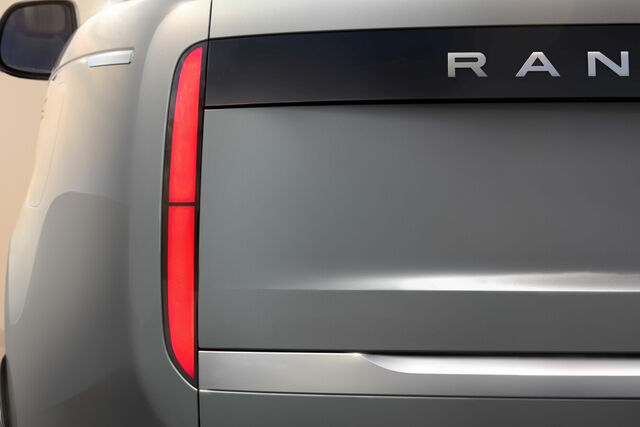
With more patents anticipated to be filed for New Range Rover Electric than any other Range Rover before, prototypes are now being subjected to one of the most rigorous engineering sign-off programmes ever. This includes extreme temperature testing in all conditions and every terrain and wading through water up to 850 mm deep.
The manufacturer says the company is on target to create the quietest and most refined Range Rover ever, with a unique active road-noise cancellation configuration and sound design, plus cabin comfort levels enabled by its electric underpinnings.
Range Rover will offer future clients a seamless electric ownership experience – effortless charging, energy partnerships, software-over-the-air updates and intelligent technology to maximise range.
Range Rover Electric will be built on the flexible Modular Longitudinal Architecture in Solihull, United Kingdom, alongside existing mild and extended-range plug-in electric hybrid Range Rover vehicles, as a new underbody facility opens at the plant.
Batteries and electric drive units (EDUs) will be assembled at JLR’s new Electric Propulsion Manufacturing Centre in Wolverhampton, also in the United Kingdom.
JLR says the Range Rover Electric will deliver performance comparable to a flagship Range Rover V8 with the all-terrain capability developed in-house by Land Rover experts that has been a hallmark since Range Rover’s inception in 1970.
Global on-road testing has started, from Sweden to Dubai, in temperatures ranging from -40°C to +50°C. The global physical testing programme has been adapted for Range Rover’s first fully electric vehicle to ensure robustness of the electric drive system, including its underfloor, battery durability, chassis integrity and vehicle dynamics tests for thermal derating.
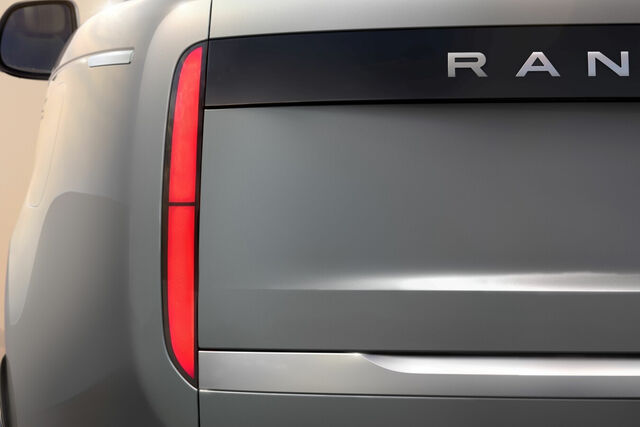
In the latest of a series of milestone achievements, Volkswagen Group Africa (VWGA) has set a new record for the number of vehicles built in one month.
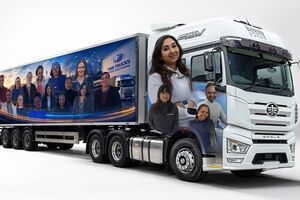
As South Africa celebrates Women’s Month, FAW Trucks Southern Africa is highlighting the changing role of women in the transport and logistics industry and their growing contribution across the sector.
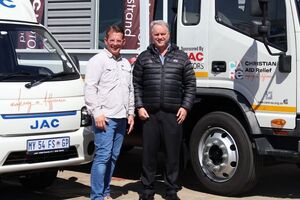
JAC Motors South Africa has strengthened its long-standing partnership with Christian Aid Relief (CARE) by donating two trucks to support the organisation’s humanitarian work.
 Advertisement
Advertisement
Advertisement
Have you ever noticed that anybody driving slower than you is an idiot, and anyone going faster than you is a maniac?
George Carlin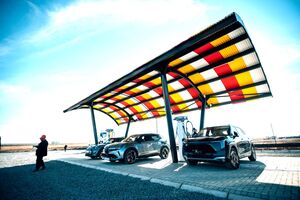
Three months after launching its off-grid, solar-powered electric vehicle (EV) charging network on the N3 corridor, Zero Carbon Charge (CHARGE) has confirmed plans to double charging capacity at both Charge hubs.
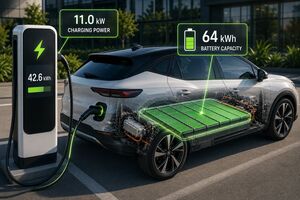
Electric vehicles (EVs) have introduced a whole new vocabulary into motoring. Instead of simply talking about litres of fuel, cylinders and kilometres per tank, motorists are now confronted with kW, kWh, AC, DC, WLTP, regenerative braking and a host of other terms.
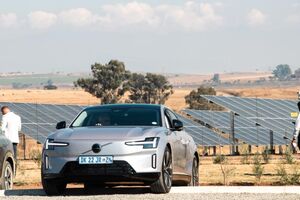
Zero Carbon Charge (CHARGE), which is building a national network of off grid, ultra-fast EV charging stations powered by renewable energy, has welcomed the latest new energy vehicle (NEV) sales figures, saying they confirm a trend it has tracked for several years.